
Bhimbetka Rock Shelters Bhimbetka Rock Shelters, Madhya Pradesh: The Earliest Traces of Human Life on the Indian Subcontinent Nestled in the.
 🔍
🔍Bhimbetka Rock Shelters, Madhya Pradesh: The Earliest Traces of Human Life on the Indian Subcontinent Nestled in the foothills of the Vindhyachal Range in Madhya Pradesh, about 45 km away from Bhopal, Bhimbetka is home to ancient rock shelters where the earliest human life on the Indian subcontinent existed hundreds of centuries ago. Evidence suggests that these rock shelters are where the South Asian Stone Age began. Many of these caves feature prehistoric cave paintings dating back to even 300 centuries. With over 750 rock shelters and caves dotting Bhimbetka, some of which we
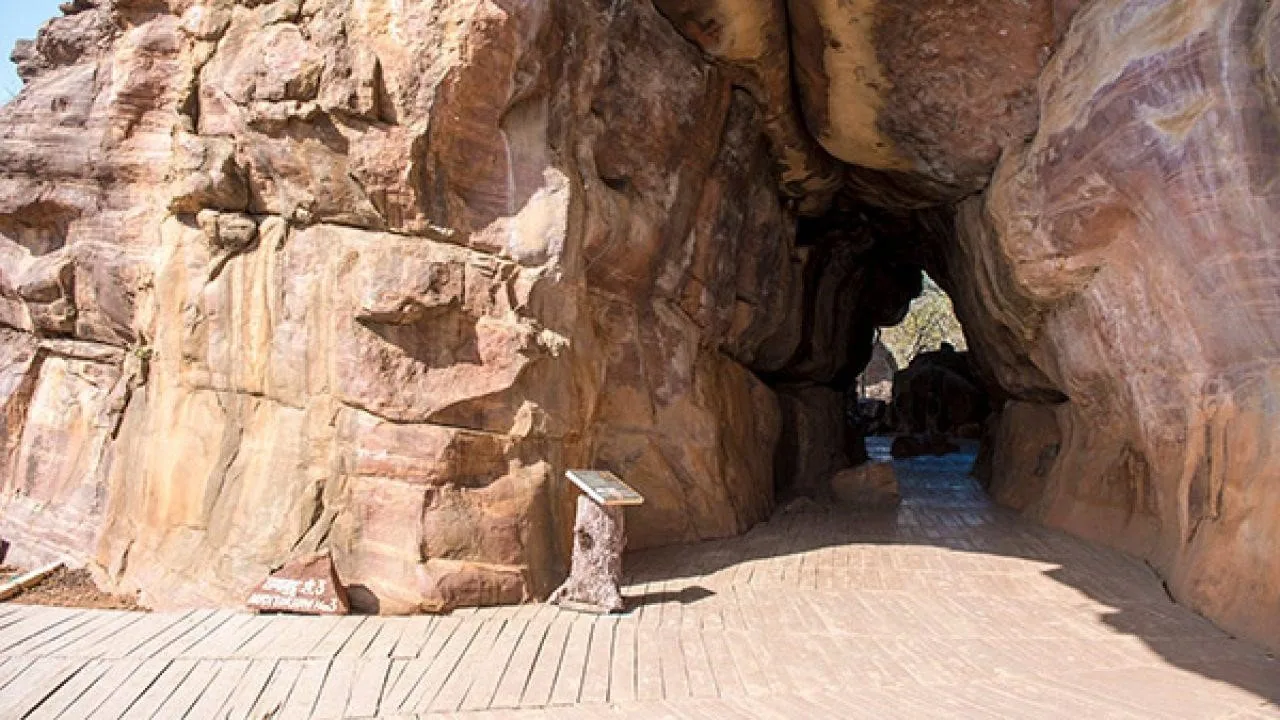 🔍
🔍Bhimbetka comprises of five clusters of rock shelters distributed across an area of 10 km, spanning seven hills. The archaeological significance of Bhimbetka remained unknown to the modern world for a long time. Though a reference to the site was made in 1888 in a scholarly paper by W. Kincaid, an official of British India, he mentioned it as a Buddhist site. Much later, an Indian archaeologist named Vishnu Shridhar Wakankar discovered these rock shelters in 1957. The real significance of these caves, however, was realized only in 1970. After that, over 750 rock shelters have been
 🔍
🔍Bhimbetka Rock Shelters possess the oldest rock paintings known to exist in the Indian subcontinent. Out of the 754 rock shelters recognized till now, 400 shelters feature impressive rock paintings that span a vast period of time, starting from 30000 years ago to the medieval age. The themes and motifs featured in these paintings, such as hunting, dance, animals, geometric figures, etc. provide insights into the cultural evolution of humans. The colors used for the paintings are vegetable colors that have stood the test of time. Interestingly, the 21 villages located around the
 🔍
🔍Today, Bhimbetka is one of the largest prehistoric complexes in India and a top tourist attraction in Bhopal. The floors and stone walls of these rock shelters are touted as the oldest in the whole world. The archaeological site was declared as a protected site and came under the maintenance of the Archaeological Survey of India in 1990 while UNESCO declared it as a World Heritage Site in 2003.
 🔍
🔍Though the Bhimbetka complex comprises hundreds of shelters, visitors are allowed to explore only 12 to 15 of them. The major things to see at Bhimbetka include: Auditorium Cave, the largest cave at the site which stands bordered by quartzite towers Paintings of prehistoric times in which humans are depicted as hunters and food gatherers Paintings of historic times that feature fighters, elephants bearing metal weapons, riders on horses, and battle scenes where rulers carry spears, swords, arrows, and bows Zoo Rock that features paintings of various animals, such as elephants
 🔍
🔍Bhimbetka derives its name from Bhim, one of the Pandava princes from the Mahabharata. According to legends, Bhim sat at this location when the Pandavas were in exile. Since the word sat translates to baitha in Hindi, the place was called Bhimbetka which means the place where Bhim sat. It is presumed that the rock art in at least 100 shelters may have been lost to time. The site has a rather mysterious painting of a man being attacked by a huge red bison. The uniqueness of this painting is that it can be seen only when the sunlight is just appropriate. Most of the rock art is d
Our itineraries cover stay, meals and the full sightseeing circuit.
Everything travellers ask us most often. Still unsure? Message us on WhatsApp and a real MP Holidays expert will reply.