
Around 1300 steps up from Mahadev, and at Shivratri people carry iron trishuls weighing three to four quintals the whole way.
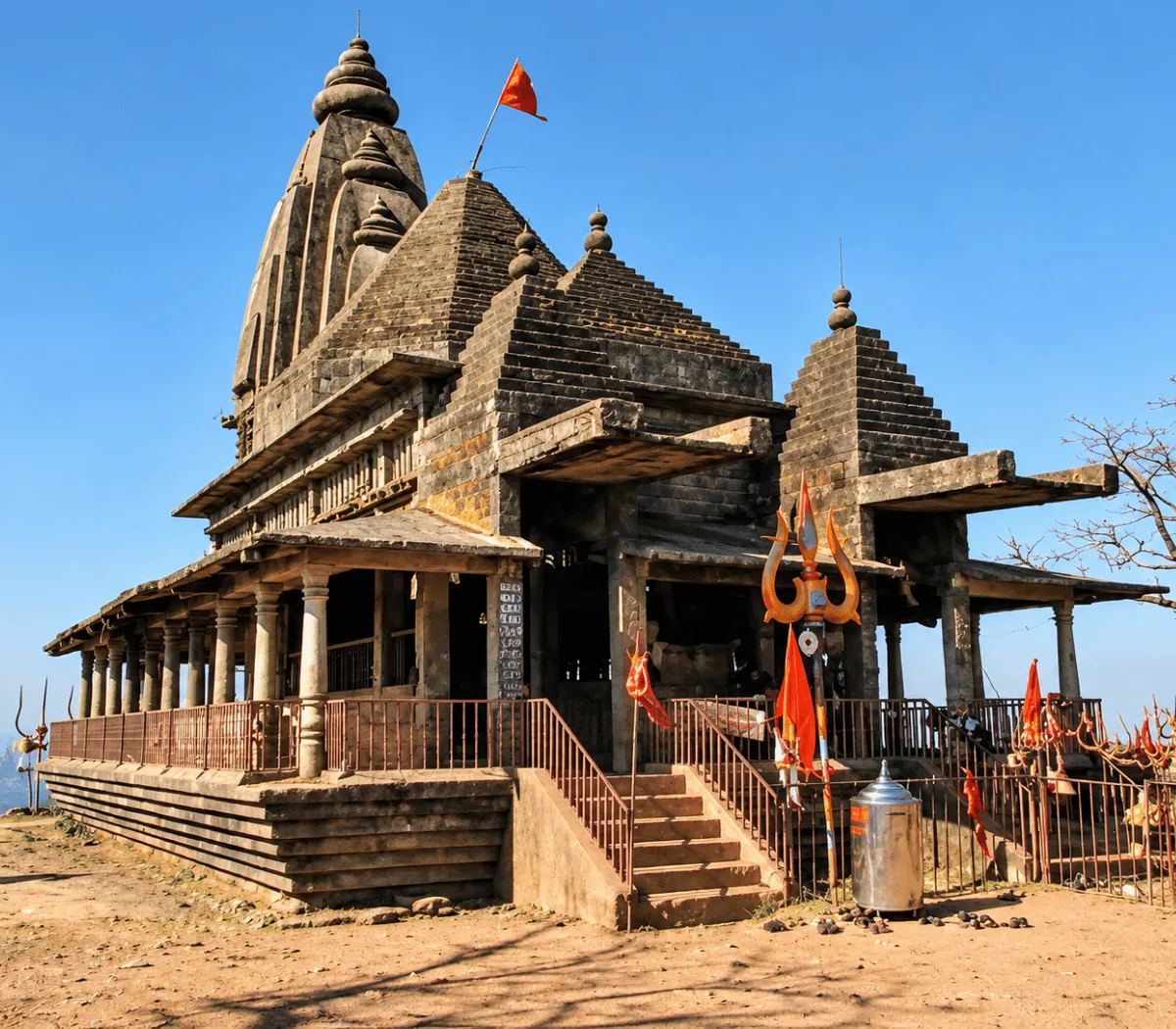
Chauragarh is a pilgrimage centre at an altitude of 1326 metres. The shrine itself is dedicated to Shiva and stands 4 km from Mahadev, at the end of a steep climb of about 1300 steps. There is no easier way up.
What sets Chauragarh apart from other hill shrines is the offering. Devotees make the strenuous climb carrying a trishul to present to Shiva, and the practice becomes most visible during Shivratri, when trishuls weighing three to four quintals are carried up to the shrine. A dharmashala at the top allows devotees to rest and stay. The accumulated trishuls planted around the shrine are the lasting impression most visitors take away.
The route begins at Mahadev and climbs roughly 1300 steps over 4 km. It is unrelentingly steep and should be treated as a serious walk, not a stroll. Most pilgrims start in the early morning to avoid climbing in the heat.
At the top is the shrine to Shiva, surrounded by the trishuls left by generations of devotees. The scale of that accumulation is the thing to look at; each one was carried up the same steps you have just climbed.
A dharmashala stands at the shrine where devotees can rest and stay. For anyone doing the climb at a slow pace, or wanting to be at the top early, it makes the whole trip more manageable.
The climb starts at Mahadev and is the hardest thing most visitors do in Pachmarhi. Treat it accordingly.
November to February is the best window for the climb, with cool air and dry steps. Shivratri, in February or March, is the single most important occasion here and the hardest time to make the ascent comfortably. The monsoon makes the steps wet and is best avoided.
Everything travellers ask us most often. Still unsure? Message us on WhatsApp and a real MP Holidays expert will reply.