
The Bhagoria Festival is a vibrant tribal celebration in Madhya Pradesh, famous for traditional Bhagoria dance, colourful clothing, lively village markets and rich Bhil culture. Celebrated before Holi, it offers visitors a unique cultural experience in Jhabua, Alirajpur and nearby regions.
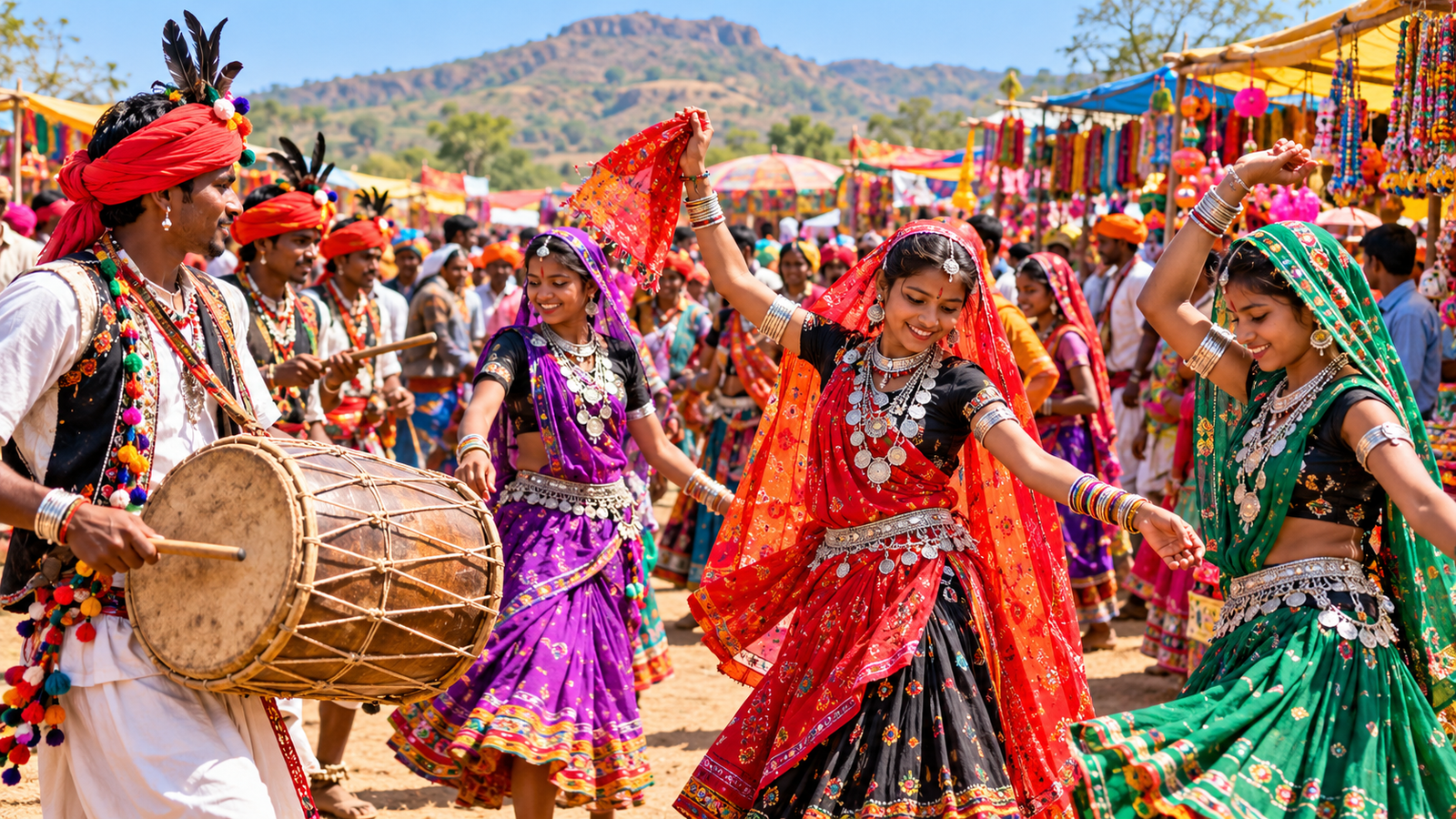
The Bhagoria Festival is one of the most colourful tribal celebrations in Madhya Pradesh. Held shortly before Holi, this traditional festival brings together the Bhil, Bhilala and other local communities through music, dance, colourful clothing and lively village markets.
The festival is especially popular in Jhabua, Alirajpur, Dhar and Khargone. Visitors can experience traditional Bhagoria dance, explore local handicrafts, enjoy regional food and witness the cultural heritage of western Madhya Pradesh.
Unlike festivals held at a single venue, Bhagoria takes place across several villages on different market days. This makes it a fascinating cultural experience for travellers interested in local traditions and community celebrations.
The Bhagoria Festival in Madhya Pradesh is a traditional celebration associated with the harvest season, spring, and the days leading up to Holi.
The festival has deep roots in the lives of the Bhil and Bhilala communities. It provides an opportunity for families and friends to gather, celebrate their cultural identity and participate in traditional activities.
One of its most distinctive features is the Bhagoria Haat, a village marketplace that becomes a centre of celebration.
People wear colourful traditional clothing, play musical instruments and participate in group dances. Local vendors sell jewellery, handicrafts, household items, food and agricultural products.
The festival is also associated with traditional courtship customs. However, Bhagoria is much more than a marriage-related gathering. It celebrates community relationships, agriculture, cultural heritage and the arrival of spring.
The Bhagoria Festival dates change each year because the celebration follows the Hindu festival calendar.
Bhagoria generally takes place during the seven days leading up to Holi, usually in February or March.
Madhya Pradesh Tourism currently lists the festival for March 2027, but the exact village-wise schedule needs confirmation.
The celebrations do not happen in every village on the same day. Different locations organise their Bhagoria Haat according to their traditional weekly market schedules.
Visitors should confirm the latest programme through local tourism offices or district administration websites before making travel arrangements.
Planning accommodation and transport is especially helpful during the festival period.
Bhagoria celebrations are concentrated in the tribal regions of western Madhya Pradesh.
Jhabua is one of the most recognised destinations for experiencing Bhagoria.
The district attracts visitors interested in tribal music, colourful markets, traditional clothing and community celebrations.
Popular Bhagoria locations in the district include Jhabua, Ranapur and Para.
Alirajpur is another important centre of Bhagoria celebrations.
Traditional markets, group dances and local gatherings create a festive atmosphere across the district.
Locations associated with Bhagoria include Valpur, Katthiwara and Sondhwa.
Dhar district also participates in Bhagoria celebrations, particularly in its tribal areas.
Visitors can experience regional traditions, local markets and traditional music.
Travellers exploring this region can also visit Mandu Tourism attractions as part of a longer Madhya Pradesh itinerary.
Khargone is another district associated with Bhagoria festivities.
Its rural markets and tribal communities contribute to the festival's cultural diversity.
Travel tip: Choose your festival location based on the confirmed haat schedule rather than assuming every destination hosts celebrations daily.
One of the main attractions of the celebration is Bhagoria dance, a traditional form of group dancing performed during the festival.
Men and women gather in colourful clothing and dance to the rhythm of regional musical instruments.
Common instruments include:
Dhol and traditional drums
Mandal percussion instruments
Flutes
Metal plates and other rhythmic instruments
The dances create a lively atmosphere as groups move together to traditional rhythms.
Women often wear colourful sarees or ghagra cholis with traditional silver jewellery, while men wear festive clothing.
Folk songs and musical performances reflect the cultural identity of the communities.
For visitors, these performances offer an opportunity to appreciate traditions that have been passed down through generations.
A Bhagoria Haat is a traditional weekly marketplace that becomes a centre of festivities during the celebration.
These markets serve an important social and economic purpose for local communities.
During Bhagoria, ordinary market activities combine with music, dancing, food stalls, and festive gatherings.
Visitors may find locally made jewellery, clay pots, colourful clothing, household products, and handicrafts.
Traditional silver ornaments are particularly associated with the region's tribal clothing.
Food stalls add to the festive atmosphere.
Visitors can explore regional snacks and locally prepared dishes, depending on the market and available vendors.
Families, friends and community groups meet at the haats.
The markets provide opportunities for social interaction, cultural celebrations and community bonding.
Some markets feature traditional swings, small rides and other forms of entertainment.
The combination of shopping, music and celebrations makes the Bhagoria Haat a distinctive cultural experience.
The origins of Bhagoria are associated with several local traditions and historical accounts.
One popular account connects the festival with the period of Raja Bhoj and early fairs organised by Bhil rulers.
Other traditions associate Bhagoria with seasonal celebrations and community gatherings.
The festival also has agricultural significance.
Many local communities traditionally celebrate after the harvest season, making Bhagoria an occasion for enjoyment before the arrival of Holi.
Over time, the festival has continued to evolve while preserving important elements of tribal music, dress and community participation.
For local communities, Bhagoria remains an expression of cultural identity rather than simply a tourist attraction.
Travellers planning to attend the Bhagoria Festival should arrange transport, accommodation, and local travel according to the confirmed market schedule.
By Air: Indore is the nearest major airport for travellers visiting Jhabua.
By Train: Meghnagar is a convenient railway station for reaching Jhabua.
By Road: Jhabua has road connections with Indore and other regional destinations. Visitors can arrange a taxi or use available bus services.
Jhabua offers accommodation options for travellers visiting the festival.
Visitors can consider MPT Tourist Motel Jhabua when planning their stay.
Booking early is advisable because accommodation availability may become limited during major celebrations.
Day 1: Arrival and Local Exploration
Arrive in Jhabua, check into your accommodation, and explore the local area.
Confirm the following day's Bhagoria Haat location and transport arrangements.
Day 2: Bhagoria Haat Experience
Visit a scheduled Bhagoria market, observe traditional performances, explore local stalls, and experience the festive atmosphere.
Allow sufficient time for travelling between villages, particularly when roads become busy.
A little preparation can make the festival experience more comfortable and respectful.
Confirm the schedule: Each village follows its own market-day arrangements, so check the latest programme.
Wear comfortable clothing: Choose lightweight clothing and comfortable footwear suitable for walking through crowded markets.
Carry drinking water: Festival visits can involve extended periods outdoors.
Respect local customs: Bhagoria is an important community celebration. Ask permission before taking close-up photographs or recording individuals.
Carry cash: Some smaller market vendors may not accept digital payments.
Plan local transport: Arrange your return journey in advance, particularly when visiting remote village markets.
Avoid disrupting performances: Observe cultural activities respectfully and follow local guidance.
The Bhagoria Festival offers an opportunity to experience Madhya Pradesh beyond its well-known monuments and wildlife destinations.
Visitors can witness traditional music, colourful clothing, local markets and community celebrations in an authentic cultural setting.
The festival is particularly appealing to travellers interested in cultural tourism, photography, folk traditions and rural experiences.
It also provides an opportunity to appreciate the heritage of the communities that organise and sustain these celebrations.
Travellers interested in further festival information can explore the Bhagoria Festival Guide.
The Bhagoria Festival is a remarkable celebration of tribal culture, seasonal traditions and community life in Madhya Pradesh.
From energetic Bhagoria dance performances to colourful village markets, the festival offers visitors a memorable cultural experience.
Travellers planning a visit should confirm the festival schedule, choose suitable accommodation, and allow time to explore the traditions of Jhabua and neighbouring districts.
With thoughtful planning and respect for local customs, Bhagoria can become one of the most distinctive experiences of a Madhya Pradesh journey.
 Indira Sagar Dam: Location, Reservoir Facts and Places to Visit NearbyRead more →
 Bagh Print: History, How It Is Made and Where to Buy in Madhya PradeshRead more →
 Kanha Tour Package from Surat: Winter Safari Itinerary, Route and Cost FactorsRead more →
 Rajendra Giri Sunset Point, Pachmarhi: Timings and Best ViewsRead more →
Tell us your dates and we will send a custom itinerary. Free quote, no obligation.
Everything travellers ask us most often. Still unsure? Message us on WhatsApp and a real MP Holidays expert will reply.