
An 11th century Shiva temple left unfinished, built around one of the largest monolithic lingas in India.
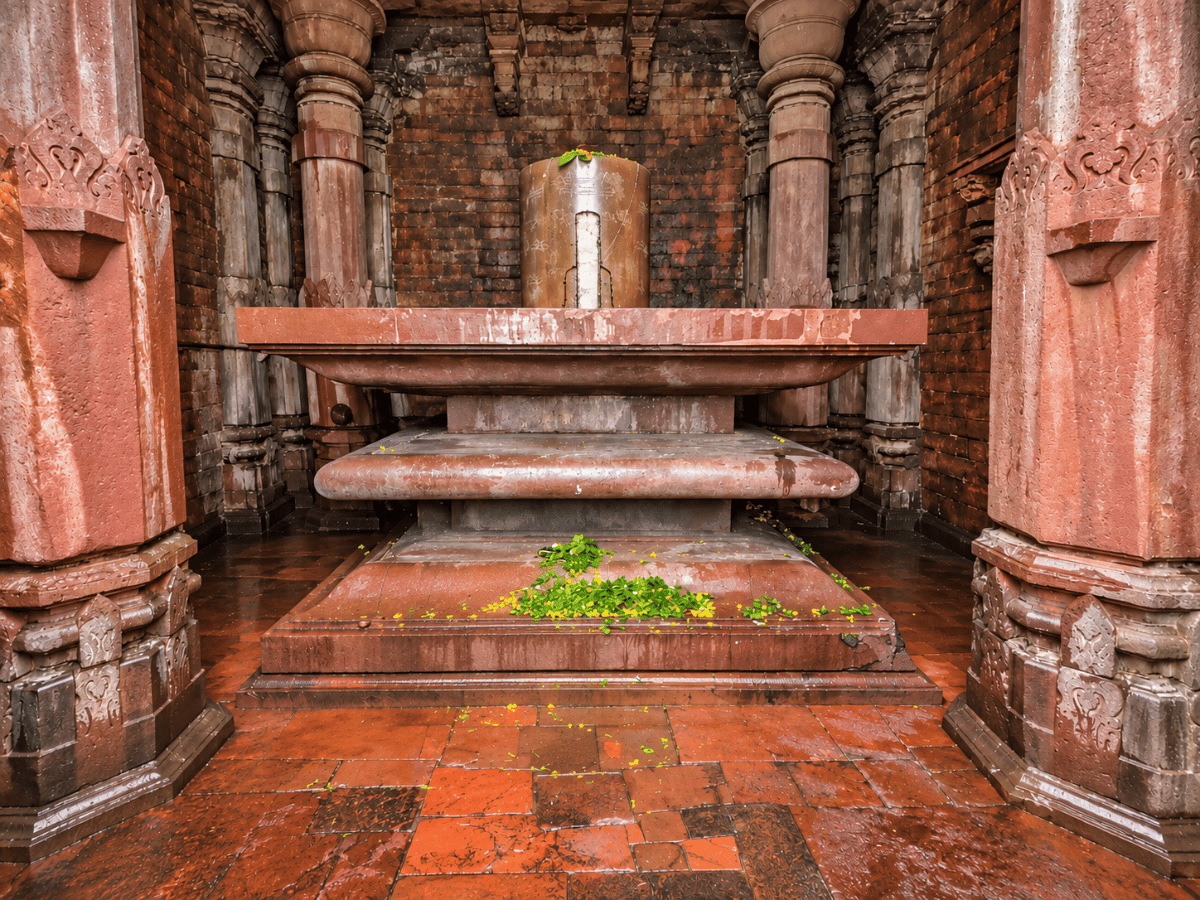
Bhojpur Shiva Temple stands at Bhojpur in Raisen district, within easy reach of Bhimbetka, and is usually seen on the same day. It is an 11th century temple of the Paramara period, associated by name and tradition with Raja Bhoj, and it was never finished. The unfinished state is what makes it unusual: the sanctum stands with its enormous monolithic linga in place, one of the largest in India, while the superstructure was left incomplete and the earthen ramp and dressed blocks used in construction remain on the site. It is a protected monument under the Archaeological Survey of India. For visitors coming from the prehistoric shelters at Bhimbetka, the contrast between rock painting and medieval temple engineering on the same day is the point of the detour.
The linga in the sanctum is cut from a single stone and is one of the largest in the country. Its scale inside an incomplete building is the strongest impression the site leaves.
The temple was never completed, so the upper structure is missing and the building stands open. This makes visible the construction methods that a finished temple hides.
Material left from the building work, including the earthen ramp and dressed stone blocks, is still on the site. Few medieval temples anywhere let you see the building process this plainly.
Bhojpur is near Bhimbetka and is normally added to the same outing from Bhopal rather than visited separately.
October to March is the comfortable season. Mornings are best, both for the light on the stonework and because the site has little shade. Shivratri brings large numbers of devotees to the temple, which is worth knowing either way.
Everything travellers ask us most often. Still unsure? Message us on WhatsApp and a real MP Holidays expert will reply.