
A UNESCO listed group of shelters whose paintings are classified into seven periods, from the Upper Palaeolithic to the medieval.
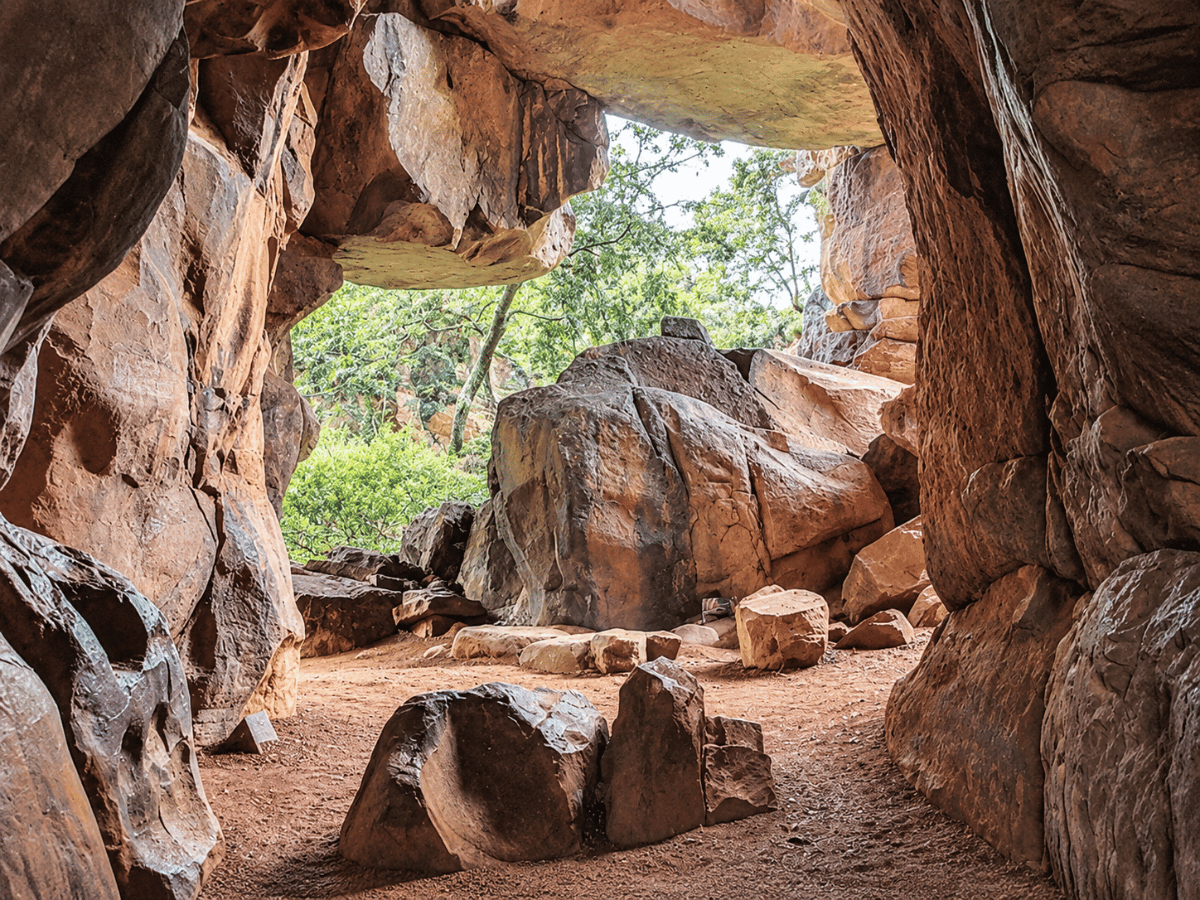
The Bhimbetka rock shelters are a credible source of information about prehistoric life in India, and the paintings on them record the social life of the people of those eras. The shelters are on the UNESCO World Heritage list. They were earlier noted as Buddhist centres, and were recognised as the dwellings of prehistoric people in 1957. The superimposition of paintings on the same surfaces shows that one canvas was used by different people at different times. The drawings and paintings are classified under seven periods: Period I, Upper Palaeolithic, with linear representations in green and dark red of huge animals such as bison, tigers and rhinoceros; Period II, Mesolithic, with smaller stylised figures showing linear decoration of the body, human figures and hunting scenes with barbed spears, pointed sticks, bows and arrows, and depictions of communal dances, birds, musical instruments, mother and child, pregnant women, men carrying dead animals, drinking and burials; Period III, Chalcolithic, with drawings resembling Chalcolithic pottery and showing that the cave dwellers here were in contact with the agricultural communities of the Malwa plains; Periods IV and V, Early History, schematic and decorative figures in red, white and yellow with riders, religious symbols, tunic like dresses, scripts of different periods, yakshas, tree gods and magical sky chariots; and Periods VI and VII, Medieval, geometric, linear and more schematic work showing degeneration and crudeness of style.
Period I work is linear, in green and dark red, and large: bison, tigers and rhinoceros drawn at a size nothing later matches. These are the figures to find first, because everything else at Bhimbetka is a departure from them.
Period II figures are smaller and stylised, with linear decoration on the bodies. These shelters show the weapons in use, barbed spears, pointed sticks, bows and arrows, and also communal dances, musical instruments, mother and child, pregnant women, drinking and burials.
Periods IV and V turn schematic and decorative, in red, white and yellow, with riders, tunic like dress, religious symbols, yakshas, tree gods, sky chariots and scripts of several periods. The medieval work of Periods VI and VII that follows is geometric and visibly cruder.
The site is visited on a marked walking route between shelters, on rock and uneven steps. The paintings are faint, so how you look matters more than how long you stay.
October to March is the right season for a walking visit over open rock. Mid morning and mid afternoon give the best raking light on faded pigment; harsh noon light flattens it. The monsoon is dramatic and green but makes the rock slippery, and summer afternoons on bare stone are unpleasant.
Everything travellers ask us most often. Still unsure? Message us on WhatsApp and a real MP Holidays expert will reply.