
The practical face of the Bhimbetka site: numbered, signposted shelters 45 km east of Bhopal.
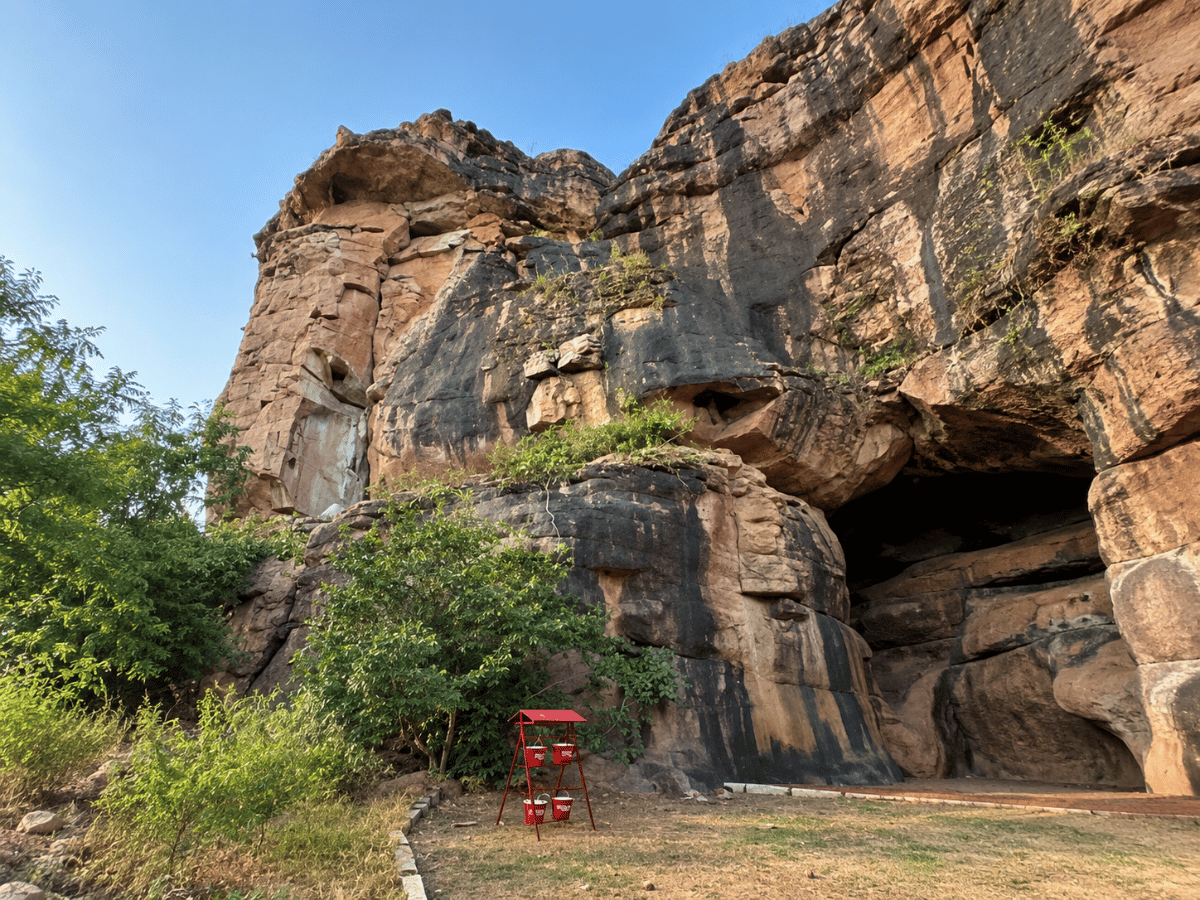
This page covers the same site as the Bhimbetka rock shelters, described here from the visitor’s side rather than by painting period. The paintings in the rock caves of Bhimbetka were first discovered in 1957 and are known to be over 10,000 years old, showing depictions of early man. The caves are the earliest known source of rock or cave art in India and the surrounding region. The site is 45 km east of Bhopal and is a designated UNESCO World Heritage Site. All the important rock shelters here are numbered and signposted, which makes the route easy to follow without a guide. One interesting spot along the way is the rock tortoise. A little uphill from the caves entry there is a small temple, and visitors to the caves usually look in on it as well.
Every important shelter is numbered and signposted, so the route can be followed unaided. Working through them in order is the simplest way to see the whole site rather than only the shelters nearest the entry.
One of the formations along the route has the shape of a tortoise and is a well known stop. It is a natural rock form, not a carving, and worth looking out for on the signs.
A little uphill from the caves entry stands a small temple. Most people who come for the caves stop there too, and it makes a natural end to the walk.
At 45 km east of Bhopal the caves are an easy half to full day run from the city. The numbering and signposting make a self guided visit practical.
October to March is the comfortable window. Morning or late afternoon light shows the paintings better than overhead sun. In the monsoon the rock route is slippery, and summer middays are hard going with no shade.
Everything travellers ask us most often. Still unsure? Message us on WhatsApp and a real MP Holidays expert will reply.