
A sandstone mausoleum on early Mughal lines, known above all for its pierced stone screens.
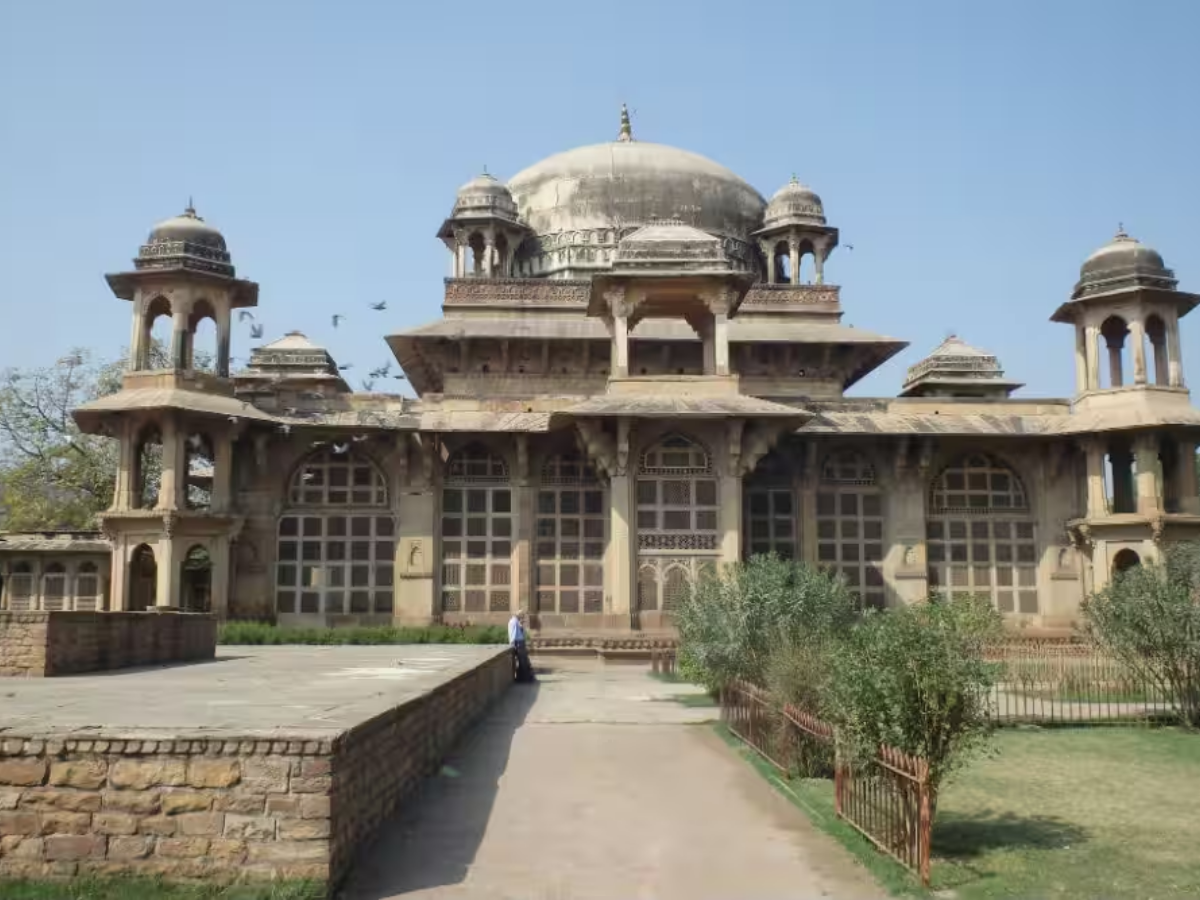
The sandstone mausoleum of the Afghan prince Ghaus Mohammed is designed on early Mughal lines, with the square chamber and domed roof that style calls for. What singles it out is the screenwork: the screens use the pierced stone technique and are as delicate as lace, cut so finely that the light coming through them patterns the floor inside.
The tomb stands in a garden enclosure in Gwalior, and the same enclosure holds the simpler tomb of Tansen, the musician of Akbar's court. Most visitors see the two together.
The jali screens are the reason to come. Cut from sandstone and worked until the pattern is as fine as lace, they are best seen from inside the chamber with the light behind them. Look closely at how the pattern repeats and turns the corners.
In the same enclosure lies the tomb of Tansen, the great musician of Akbar's court, much plainer than the mausoleum beside it. It is a place of pilgrimage for musicians and is central to the music festival held in Gwalior in his name.
The tomb is in the city rather than on the fort hill, so it fits into a half day of Gwalior sights.
October to March is the pleasant season. Mornings and late afternoons give the slanting light that shows the pierced screens at their best. During the Tansen Music Festival in December the enclosure is at the centre of the city's attention.
Everything travellers ask us most often. Still unsure? Message us on WhatsApp and a real MP Holidays expert will reply.