
West of where the Maheshwari joins the Narmada, with the Kadamb grove at its back.
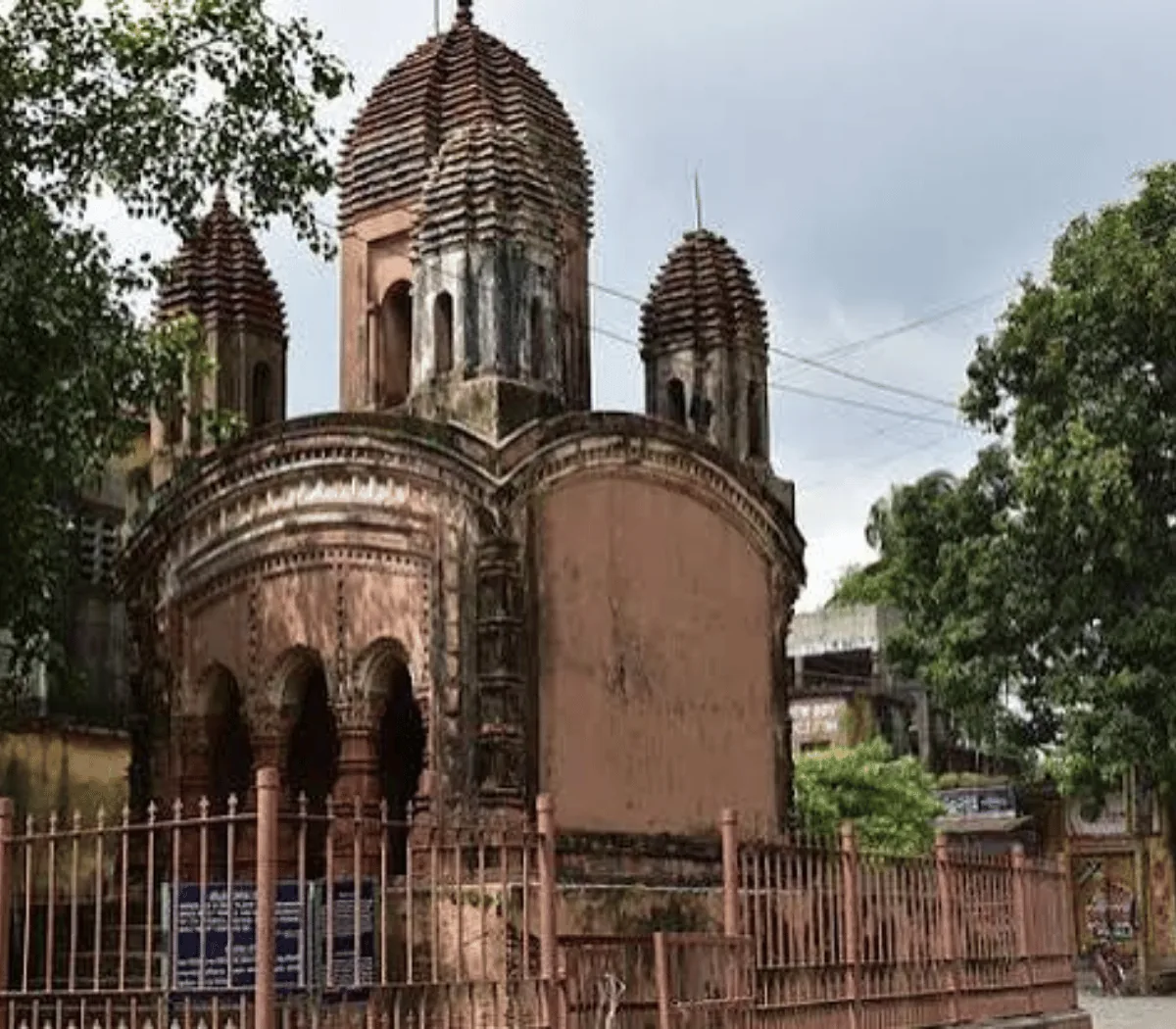
Jaleshwar Mahadev stands on the west side of the confluence of the Maheshwari and the Narmada. The legend attached to it is that the shivalinga manifested when Shiva killed the salt demon Tripurasur and offered his weapon to Narmada Ji at this place.
Behind the temple lie the Kadamb forest and the Kadambeshwar temple. The site also carries a scholarly tradition: Jagat Guru Shankaracharya is said to have rested here and entered into a categorical discussion on the different thought processes of the sanatan Hindu religion with Pandit Mandan Mishra. Between the confluence, the grove and that association, this is the most layered of the smaller Maheshwar shrines.
The temple is in regular worship, and its linga is the one associated with the Tripurasur story and the offering made to Narmada Ji here. The shrine is small and the visit is short.
The temple sits on the western side of the meeting of the Maheshwari and the Narmada, and the sangam is part of the reason the site is held sacred. Walk down to the water rather than only viewing it from the temple.
Behind the main shrine is the Kadamb forest, with the Kadambeshwar temple established in it. This is also the ground associated with Shankaracharya's stay and his discussion with Pandit Mandan Mishra.
The temple is reached on foot at the western side of the confluence and is normally combined with the Kaleshwar Mahadev temple on the eastern side.
October to March is the comfortable season and the river is at its most settled. Early morning is the best hour, when worship is underway and the confluence is quiet. The monsoon raises the water considerably and can make the approach to the sangam difficult.
Everything travellers ask us most often. Still unsure? Message us on WhatsApp and a real MP Holidays expert will reply.