
Fifteen living shrines that keep the plateau ringing with bells, aartis and centuries of devotion.
Around the Narmada kund and across the town, these shrines form the daily rhythm of Amarkantak. Tap any temple to see it up close.
 🔍
Nine kilometres out on the Shahdol road, north-east of the Narmada temple, Jwaleshwar Mahadev shelters a dark Banalinga set two to three feet below floor level. The Johila river rises beside it. Local tradition holds that when Shiva burned the three Puras, he cooled the surviving flame into water, and it surfaced here as the Johila. The forest setting keeps it quiet even in season.
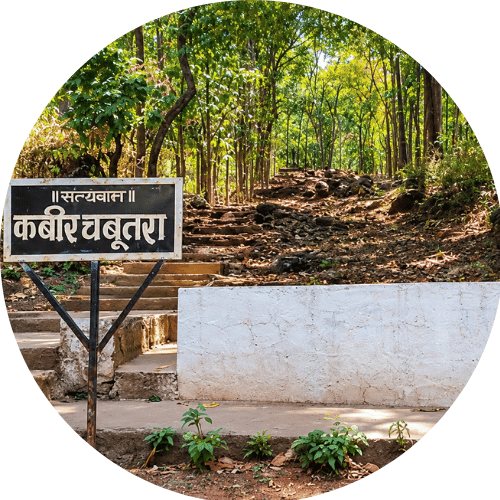 🔍
Five kilometres from town on the Bilaspur road, at the point where the Anuppur, Dindori and Bilaspur districts meet, this raised platform marks where the fifteenth-century mystic Kabir is said to have meditated. An old banyan and a small reservoir stand beside it, and a little shrine holds a pair of the saint's slippers. Kabirpanthis, and the Panika community in particular, count it among their holiest places.
 🔍
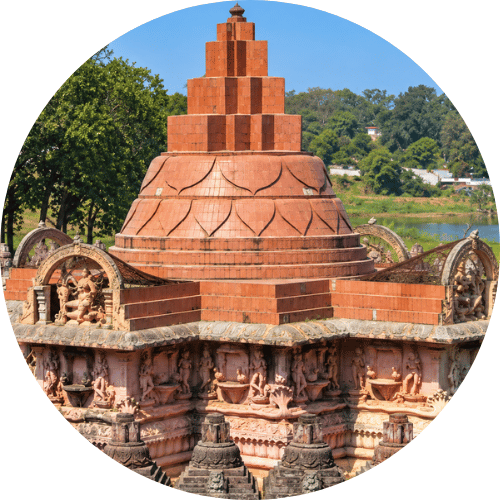
Part of the ASI-protected Kalachuri group two kilometres from the bus stand, the Keshav Narayan is a twin-shrine temple laid out around a shared mandapa on the five-projection pancharatha plan. Both sanctums are dedicated to Vishnu. Look for the lotus scrollwork on the jambs, the bracketed columns and the stepped pyramidal spires, all typical of eleventh-century Kalachuri workmanship.
 🔍
The Shiva shrine beside the kund itself, at the heart of the cluster of sixteen stone temples that ring the pool where the Narmada rises. The Kalachuris of Tripuri raised the original in the twelfth century and Maharani Ahilyabai Holkar later renovated it. Adi Shankaracharya is said to have declared this stream the true source of the river. Aartis run here through the day.
 🔍
The most unusual of the Kalachuri temples: its sanctum sits about ten feet below ground, reached by steps descending from the raised mandapa, a plan rarely seen in this region. The lingam within is traditionally linked to Adi Shankaracharya's visit, with the temple around it attributed to King Lakshmikarna. Sandstone throughout, and cool at the bottom of the steps even at midday.
 🔍
Under construction since 1991, this is the Shri Yantra Mahameru Shakti Peeth, an attempt to build the Sri Yantra as a three-dimensional structure. It stands on a ninety-thousand square foot platform, fifty-two feet in each direction. Four Devi faces crown the entrance tower, with sixty-four yoginis ranged sixteen to a side. The builders follow the Agama Shastras and work only under Guru Pushya Nakshatra.
 🔍
One of the sixteen stone temples standing around the Narmada Kund, dedicated to Ram and Sita. It sits close enough to the water that the bhajans carry across the kund, and it is busiest in the early morning and at evening aarti, when pilgrims making the circuit of the shrines pause here.
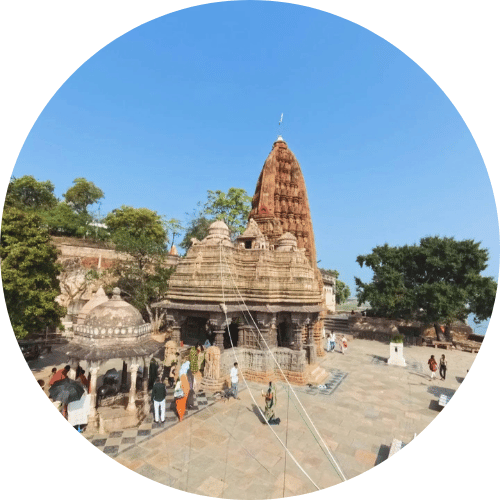 🔍
A Shiva temple of the ancient Kalachuri group, raised in the eleventh century when Maharaja Karnadeva's builders were at work across the plateau. It shares the Nagara idiom of its neighbours: a square sanctum, a stepped spire and carved door jambs, all in local sandstone weathered to a warm red. The whole group is protected by the Archaeological Survey of India.
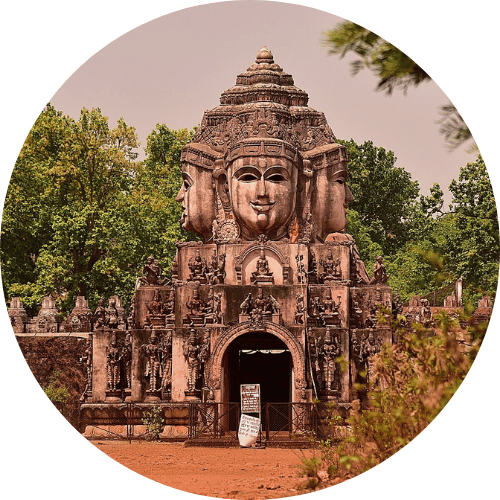 🔍
Built by the Kalachuri Maharaja Karnadeva, who ruled from 1041 to 1073, and often called the oldest temple in Amarkantak. It stands on a rise above the town and takes its name from the three faces carved at the top of the shrine. The climb is short, and the view back across the plateau is the reason most people make it.
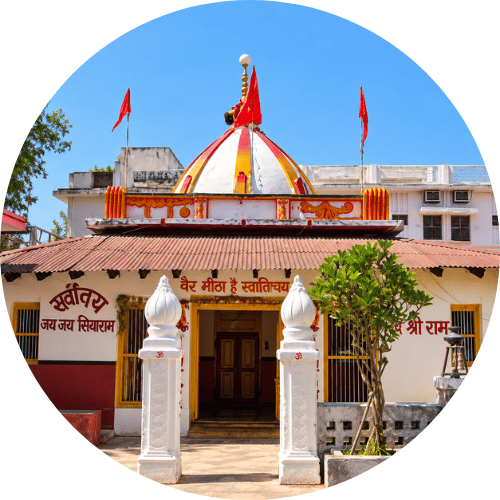 🔍
A modern campus dedicated to Gayatri, the Vedmata or mother of the Vedas, set a little apart from the older shrines around the kund. Worship at Gayatri temples centres on the Gayatri mantra and the daily sandhya. The grounds are open and unhurried, which makes this a common first or last stop on a temple circuit of the town.
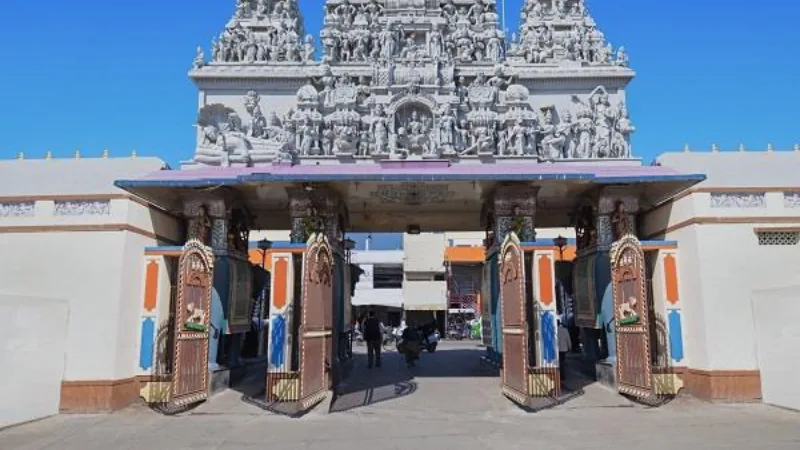 🔍
One of the shrines in the ring of sixteen stone temples around the Narmada Kund, dedicated to Annapurna, the goddess of food and plenty who is worshipped as the one who feeds Shiva himself. Pilgrims walking the circuit of the kund commonly stop here. It is a small shrine, and easy to miss if you are not making the full round.
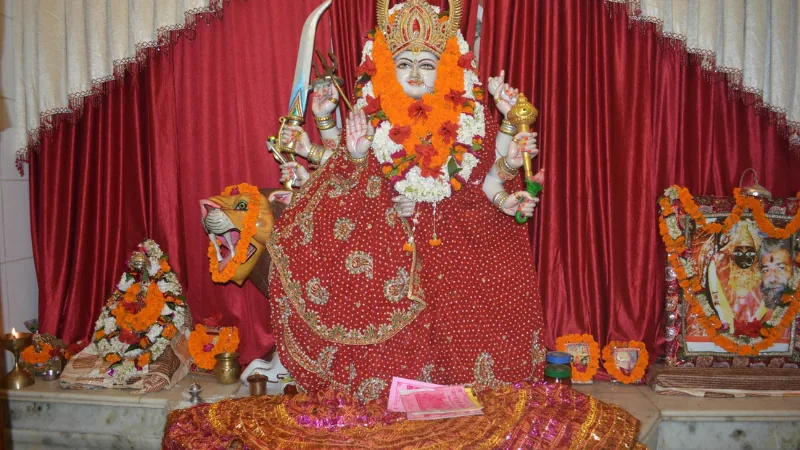 🔍
A Devi shrine among the temples clustered around the Narmada Kund. It is quiet on most days and then fills through Navratri, when the nine nights of the goddess bring the largest crowds of the year to this corner of the plateau. Worth timing a visit for if you are in Amarkantak during Ashwin or Chaitra.
 🔍
Gyarah Rudra, dedicated to the eleven Rudra forms of Shiva named in the Vedic tradition, standing with the other shrines around the Narmada Kund. The eleven are understood as the vital breaths together with the mind, and temples enshrining all of them in one place are uncommon. It is one of the quieter stops on the kund circuit.
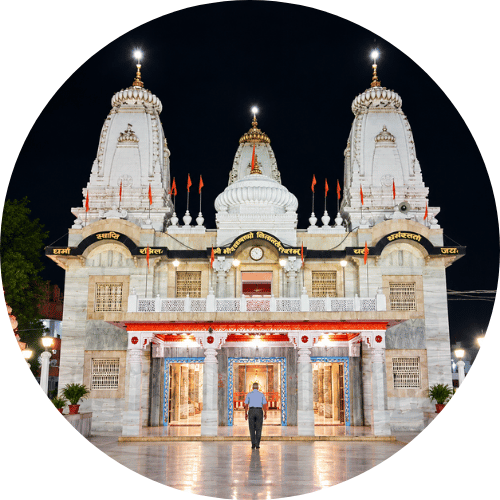 🔍
A shrine of the Nath sampradaya among the temples around the Narmada Kund, honouring Gorakhnath, the yogi who gave the Nath order its shape and is counted among the Navnath siddhas. Nath ascetics have long associations with Amarkantak and its forests, and this temple keeps that thread of the town's religious life visible.
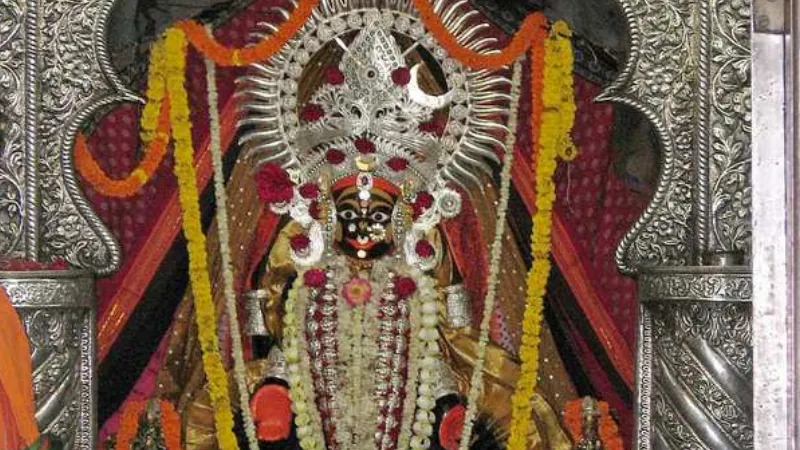 🔍
A shrine to Chandika, the fierce aspect of the Devi, set among the Sal forests that cover the plateau. Amarkantak also has a Chandika cave associated with the goddess. The approach runs through forest for much of the way, and the temple stays quiet outside the Navratri weeks.
Our Amarkantak packages cover stay, meals and the full sightseeing circuit. Free quote within 2 hours.
Everything travellers ask us most often. Still unsure? Message us on WhatsApp and a real MP Holidays expert will reply.