
The fort that overlooks Gwalior, layered with Hindu and Mughal palaces across several centuries.
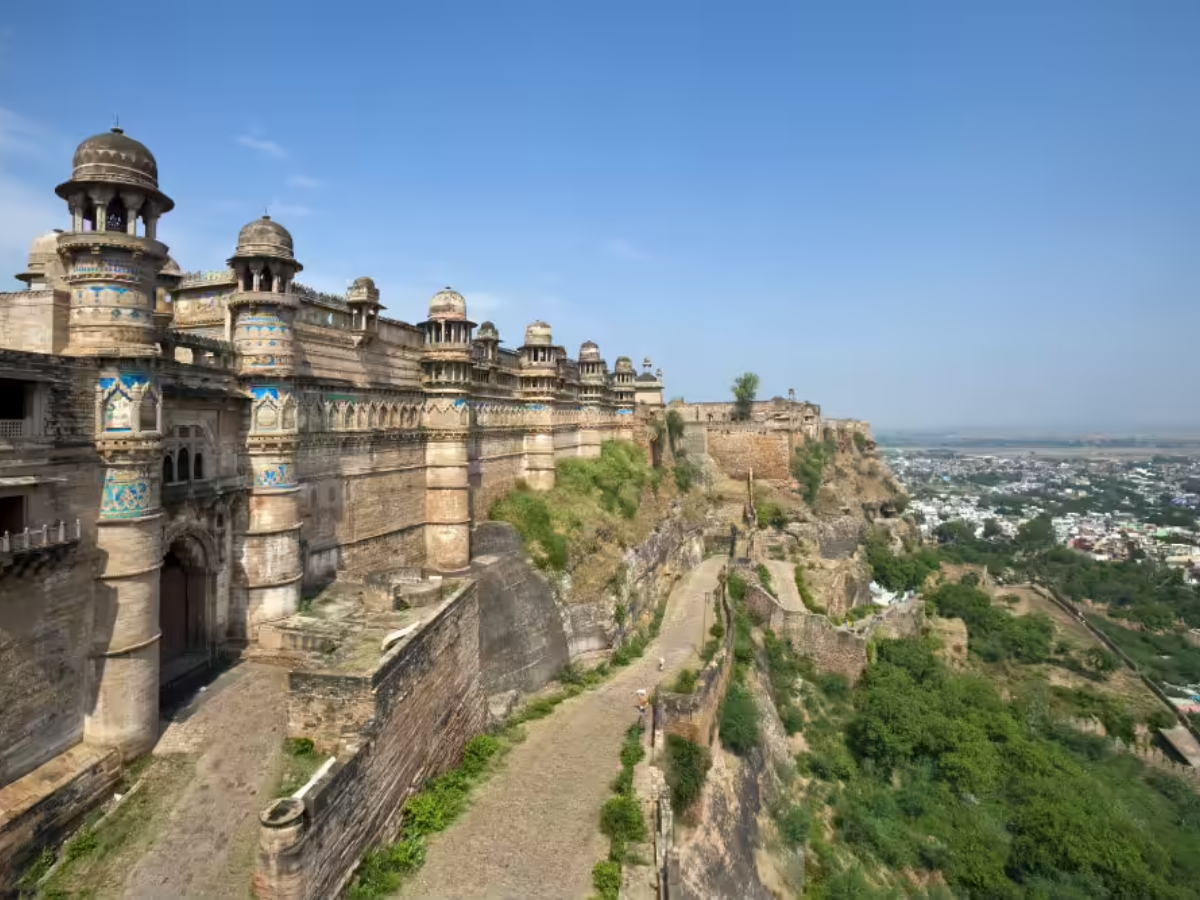
Massive Gwalior Fort, popularly called the Gibraltar of India, overlooks the city. Emperor Babur reputedly described it as "the pearl in the necklace of the forts of Hind." Its architecture is unusual in a specific way: Chinese dragons have been crafted at the hilt of the pillars, an influence that came from trade between China and India in that period.
The fort is not one building but a sequence. The palace of Man Singh is the most interesting example of early Hindu work of its class in India, and another palace of even greater extent was added in 1516. The Mughal emperors Jahangir and Shah Jahan then added palaces of their own, making a group of buildings unmatched in central India for interest. Of the buildings that so impressed Babur, however, probably little now remains.
Among the apartments in the palace was the celebrated chamber named the Baradari, carried on twelve columns, 45 ft square, and roofed in stone. It counts as one of the finest palace halls anywhere, and it is also a lesson in improvisation, since the Hindu architect had to find ways of imitating the vaults the Muslim builders used.
Chinese dragons are carved at the hilt of the pillars, which is not something you expect on a fort in central India. They are evidence of the India to China trade of the period and are worth hunting for as you move through the palaces.
Jahangir and Shah Jahan each added a palace to the two Hindu ones already here. Walking from the earlier work to the later makes the change in taste and technique obvious within a few minutes.
The fort occupies a long hilltop and contains several separate monuments, so it is a half day rather than an hour.
October to March is the season for a hilltop fort in this part of Madhya Pradesh. Mornings are cool and the light is good on the sandstone. April to June is severe on the exposed summit, and the monsoon brings dramatic skies but slippery stone underfoot.
Everything travellers ask us most often. Still unsure? Message us on WhatsApp and a real MP Holidays expert will reply.