
Colossal Tirthankara figures cut straight into the cliffs along the Urvai approach to Gwalior Fort.
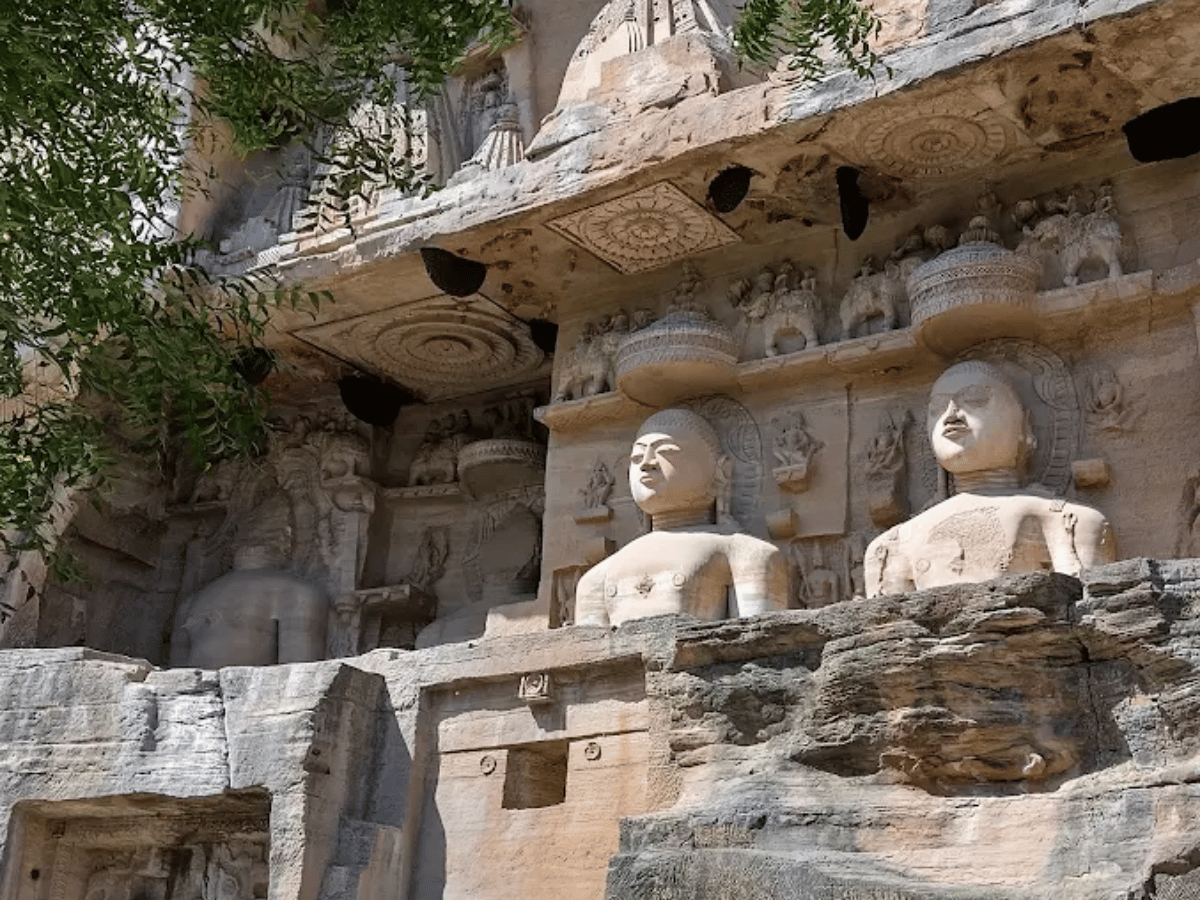
The cliffs of the Gwalior Fort hill carry a series of Jain Tirthankara figures cut directly into the rock, the largest of them several times human height. Most are found along the Urvai approach, the old road that climbs through a gorge to the fort, so they are passed rather than visited: the carvings line the route on both sides as you ascend.
They were cut under Tomar patronage, in the same period that produced the Jain statues on the fort slopes at Gopachal. Many were damaged when Babur's forces took the fort in the 16th century, and the repairs made later are still visible on several figures. That mixture of ambition and injury is what most visitors remember.
Figures of the Tirthankaras are cut into niches hollowed out of the cliff, some seated, some standing, and the biggest tower over the road. Driving past tells you nothing. Walking at least part of the gorge is the only way to take them in.
Several figures carry visible damage from the capture of the fort in Babur's time, and later restoration work on faces and limbs can be picked out against the original carving. It is a rare case where the history of a monument is written on its surface.
The carvings are on the Urvai approach to the fort, so they are best combined with the fort itself rather than visited separately.
October to March is the right season for walking the gorge. Mornings are cooler and the light falls into the niches rather than against them. In the monsoon the road surface and the rock are slippery and the walk is less pleasant.
Everything travellers ask us most often. Still unsure? Message us on WhatsApp and a real MP Holidays expert will reply.